The Med Spa Business Model for Tattoo Removal: How Clinics Make Money
Understanding the economics of laser tattoo removal clinics — pricing structures, device costs, staffing models, and margins — reveals why the market is booming.
Blink Editorial Team
Technology & Industry Reporter · Published January 25, 2025 · 7 min read
This article is general educational information compiled by our editorial team from published medical literature. It has not been reviewed by a licensed clinician and is not medical advice. Laser tattoo removal carries real risks including scarring and pigment change. Consult a qualified dermatologist about your own skin before making any decision.
Medical Disclaimer: The information in this article is for educational and informational purposes only. It does not constitute medical advice and is not a substitute for professional medical consultation, diagnosis, or treatment. Individual results from tattoo removal vary. Always consult a qualified dermatologist or licensed medical professional before pursuing any procedure.
The Med Spa Business Model for Tattoo Removal: How Clinics Make Money — Blink Tattoo Removal
Laser tattoo removal has evolved from an ancillary service at dermatology practices into the core revenue driver of a dedicated clinic category. Specialized tattoo removal studios — ranging from independent single-location practices to multi-site national chains — have emerged as a distinct business format. Understanding how these businesses generate revenue, what their major cost drivers are, and what the unit economics of the procedure look like illuminates both why the market is attractive to investors and what differentiates high-performing from underperforming practices.
Revenue Model: Per-Session vs. Package Pricing
Tattoo removal clinics use two primary pricing structures. Per-session pricing charges a flat fee for each treatment, typically based on tattoo size. Rates typically range from $75–$100 for very small tattoos to $500+ for large, complex pieces. Package pricing bundles a predetermined number of sessions at a discount — this approach improves cash flow and reduces the risk that patients discontinue treatment before completion. Subscription models — monthly memberships including a set number of sessions per year — are emerging as a recurring revenue format.
Cost Structure: The Device Investment
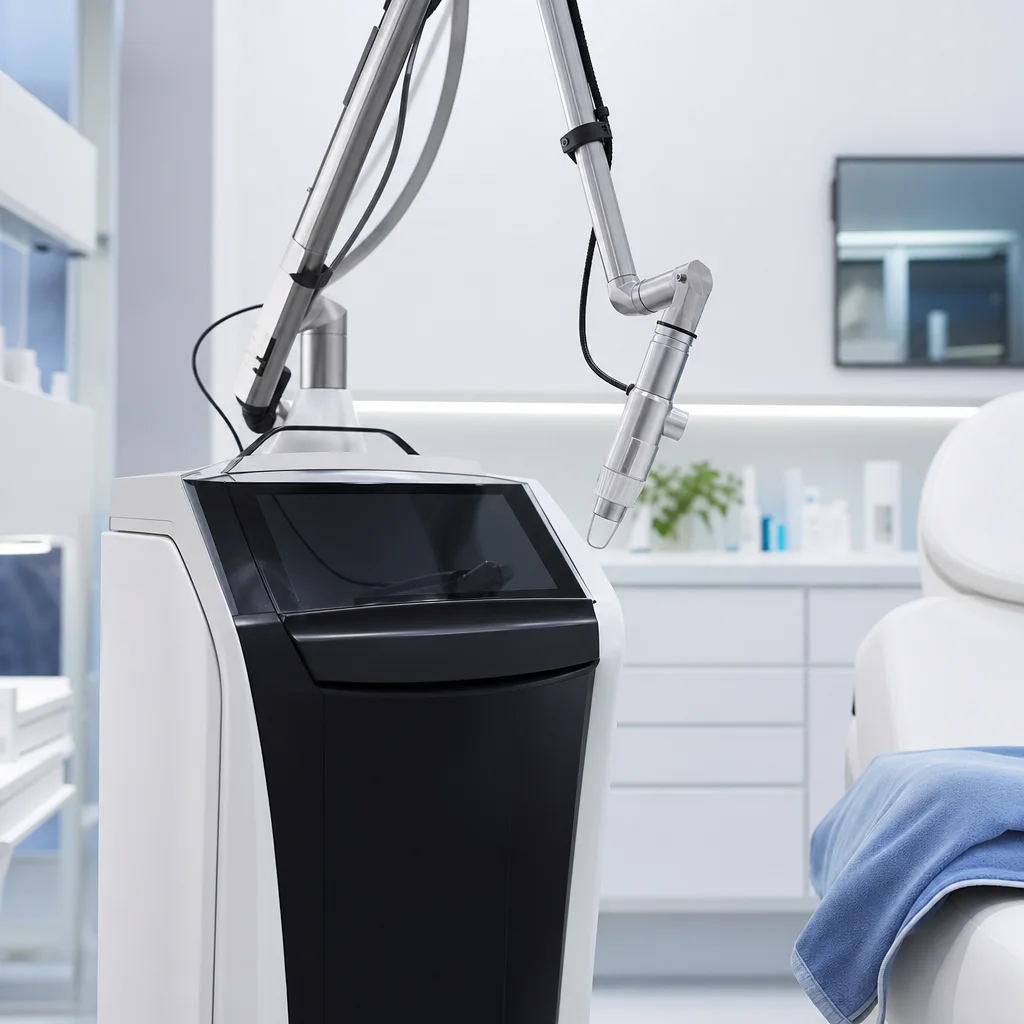
The dominant capital expense is the laser device. Premium picosecond platforms range from $150,000 to $350,000 or more for full systems. Q-switched Nd:YAG devices are available at $40,000–$100,000. Device financing reduces upfront capital requirement but adds ongoing fixed costs. Staffing represents the primary ongoing operational cost, varying significantly by state regulatory requirements regarding practitioner qualifications.
Unit Economics
A typical professional tattoo requiring 8–12 sessions at $150–$250 per session represents $1,200–$3,000 in total lifetime revenue per tattoo. A practice running a single device at 8–10 treatment hours per day can theoretically perform 100–150 sessions per week, generating gross revenue of $20,000–$40,000 weekly at average pricing. Real-world capacity utilization is lower due to scheduling gaps and consultation time.
What Differentiates High-Performing Practices
Consistently high-performing tattoo removal practices share several characteristics: investment in premium multi-wavelength picosecond technology, clear clinical protocols, strong before-after documentation, and patient communication systems that reduce attrition between sessions. Practices with high abandonment rates leave significant revenue on the table. Patient education, realistic expectation setting, and regular progress check-ins correlate with both completion rates and practice economics.
Advertisement
Questions patients ask
How much does it cost to open a tattoo removal clinic?
A basic single-operator clinic can be established for $100,000–$200,000 total startup cost. A premium multi-device practice could require $400,000–$800,000 in startup capital. Location, lease terms, device choice, and staffing model are the primary variables.
Are franchise tattoo removal chains a good investment?
Franchise models offer brand recognition and operational playbooks. Royalty fees of 6–10% of revenue are the trade-off. Thorough franchise disclosure document review and conversations with existing franchisees are essential before investing.
What is the biggest operational challenge for tattoo removal clinics?
Appointment abandonment — patients who start treatment but disappear after 2–3 sessions — is consistently cited as the top operational and financial challenge.
What states have the most regulatory restrictions on laser tattoo removal?
Requirements vary significantly by state. Practitioners should consult their state medical board for current requirements regarding who can operate aesthetic lasers.
Blink Editorial Team has reported on the aesthetic-technology industry for seven years, following everything from FDA clearances to the private-equity money reshaping tattoo-removal chains. He reads the filings and trial data so readers do not have to.
Scientific claims in this article are supported by the peer-reviewed literature and public-health authorities listed below. External links open in a new tab.
U.S. Food & Drug Administration. "Tattoo Removal: Options and Results." FDA.gov
American Academy of Dermatology. "Tattoo removal: Lasers outshine other methods." AAD.org
The Blink Newsletter
Precision reporting on tattoo removal, laser technology, and skin science. Free, twice monthly.