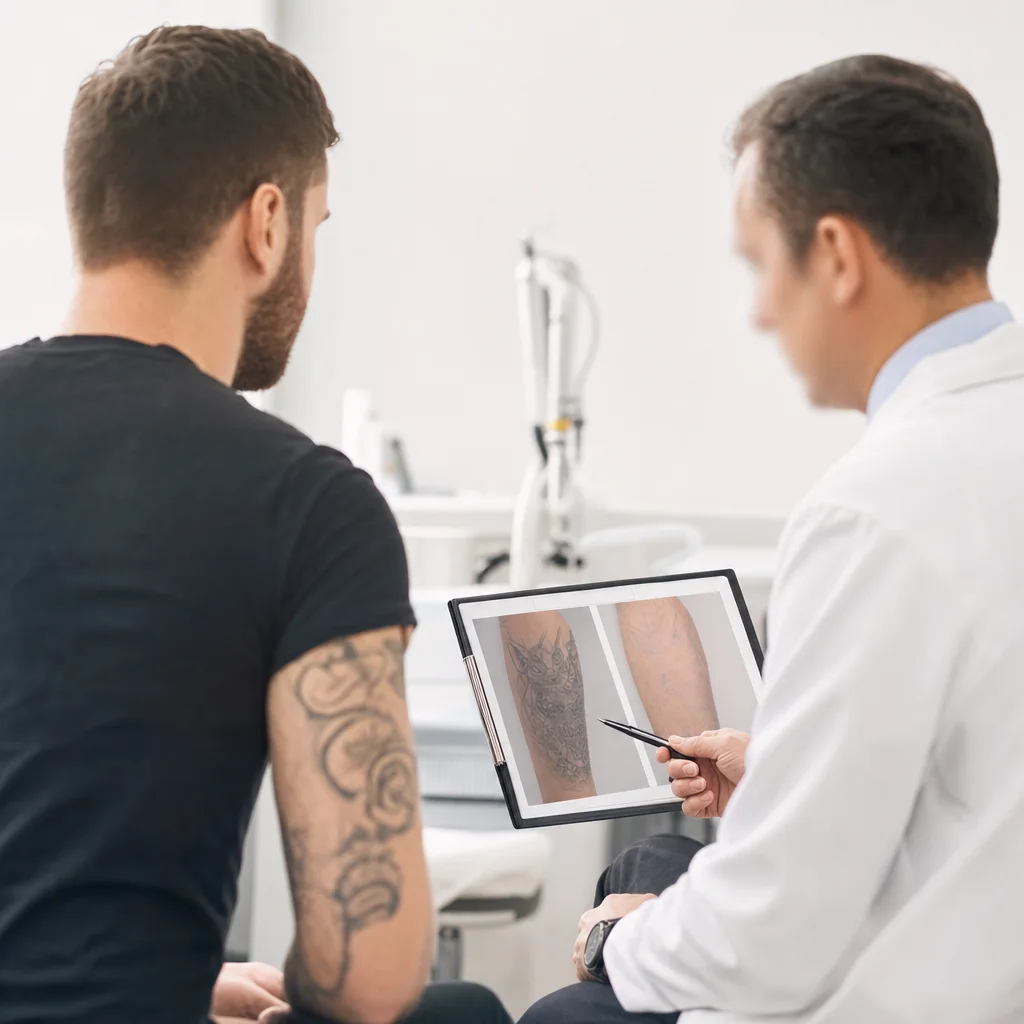
Laser tattoo removal is not simply a mechanical process of breaking down ink particles — it is also a wound-healing cascade that unfolds over days to weeks following each treatment session. The quality of that healing process directly affects outcomes: optimal healing means better ink clearance, lower side-effect risk, and skin that can tolerate the next treatment session. Understanding the biological stages of post-laser skin healing equips you to make good aftercare decisions and recognize when something requires clinical attention.
Immediate Response (0–2 Hours)
Within seconds of laser treatment, the skin exhibits several acute responses. The immediate whitening (frosting) visible during treatment results from rapid vacuolization and gas formation in the epidermis from laser-induced photoacoustic effects. This typically resolves within 20–30 minutes as gas is reabsorbed. Erythema (redness) develops quickly as dermal blood vessels dilate in response to laser-induced thermal injury. Edema (swelling) forms as increased vascular permeability allows plasma proteins to extravasate into the tissue. In the first hours, the treated area may develop pinpoint bleeding, small blisters, or a combination of both, representing different expressions of the same acute vascular response.
Inflammatory Phase (Days 1–5)
The body's inflammatory response is the engine of tissue repair. Neutrophils are the first immune cells to arrive, peaking within 24–48 hours. They release proteases and reactive oxygen species to clear cellular debris, including some of the shattered ink particles. Macrophages arrive within 2–4 days and take over as the primary phagocytic cells — engulfing ink fragments and beginning the transport process that eventually carries cleared ink to regional lymph nodes.
During the inflammatory phase, the treated area will appear red, swollen, and may be tender or itchy. Small blisters that formed in the first hours may reach their maximum size and begin to dry. This is normal. It is critical during this phase to avoid disrupting the inflammatory environment: do not pop blisters, do not apply products with irritants (fragrances, acids), and protect the area from infection with the barrier products your clinician recommends.
Proliferative Phase (Days 5–21)
As acute inflammation subsides, fibroblasts (connective tissue cells) migrate into the treated zone and begin producing new collagen. The epidermis regenerates — the outer layer of dead skin cells sloughs off, revealing fresh keratinocytes migrating from the wound margins. The temporary disruption of the skin barrier during this phase is why UV protection and moisturization are particularly important: a compromised barrier is more susceptible to UV-induced melanin stimulation (PIH risk) and moisture loss (which slows healing).
Meanwhile, macrophages continue working on ink fragmentation — some ink particles that were not small enough for immediate immune uptake may be further fragmented by macrophage enzymatic activity over this period. The visible fading of the tattoo over the weeks following a session reflects this ongoing immune clearance process, not just what happened in the immediate laser session.
Remodeling Phase (Weeks 3–12+)
The final and longest phase of healing involves collagen remodeling — the disorganized collagen deposited during the proliferative phase is gradually replaced with more organized fibrillar collagen. For tattoo removal purposes, this phase represents the window during which the immune clearance of ink fragments is still actively occurring and the skin is consolidating its response. The recommended 6–8 week interval between tattoo removal sessions is designed to allow this full healing cycle to complete before subjecting the tissue to another laser treatment.
Treating before remodeling is complete can increase the risk of scarring, as the skin has not yet fully reconstituted the structural integrity of its dermis. It can also reduce efficacy, as macrophages still working on clearing ink from the previous session may be disrupted, and the remaining ink fragmentation state from the prior treatment is not fully realized before the next session adds new fragmentation demands.