Tattoo Removal During Pregnancy: What the Research Says About Safety
The question of laser tattoo removal during pregnancy involves a combination of practical physiology, limited research data, and a clinical consensus that recommends waiting.
Blink Editorial Team
Editorial Team · Published December 20, 2024 · 5 min read
This article is general educational information compiled by our editorial team from published medical literature. It has not been reviewed by a licensed clinician and is not medical advice. Laser tattoo removal carries real risks including scarring and pigment change. Consult a qualified dermatologist about your own skin before making any decision.
Medical Disclaimer: The information in this article is for educational and informational purposes only. It does not constitute medical advice and is not a substitute for professional medical consultation, diagnosis, or treatment. Individual results from tattoo removal vary. Always consult a qualified dermatologist or licensed medical professional before pursuing any procedure.
Tattoo Removal During Pregnancy: What the Research Says About Safety — Blink Tattoo Removal
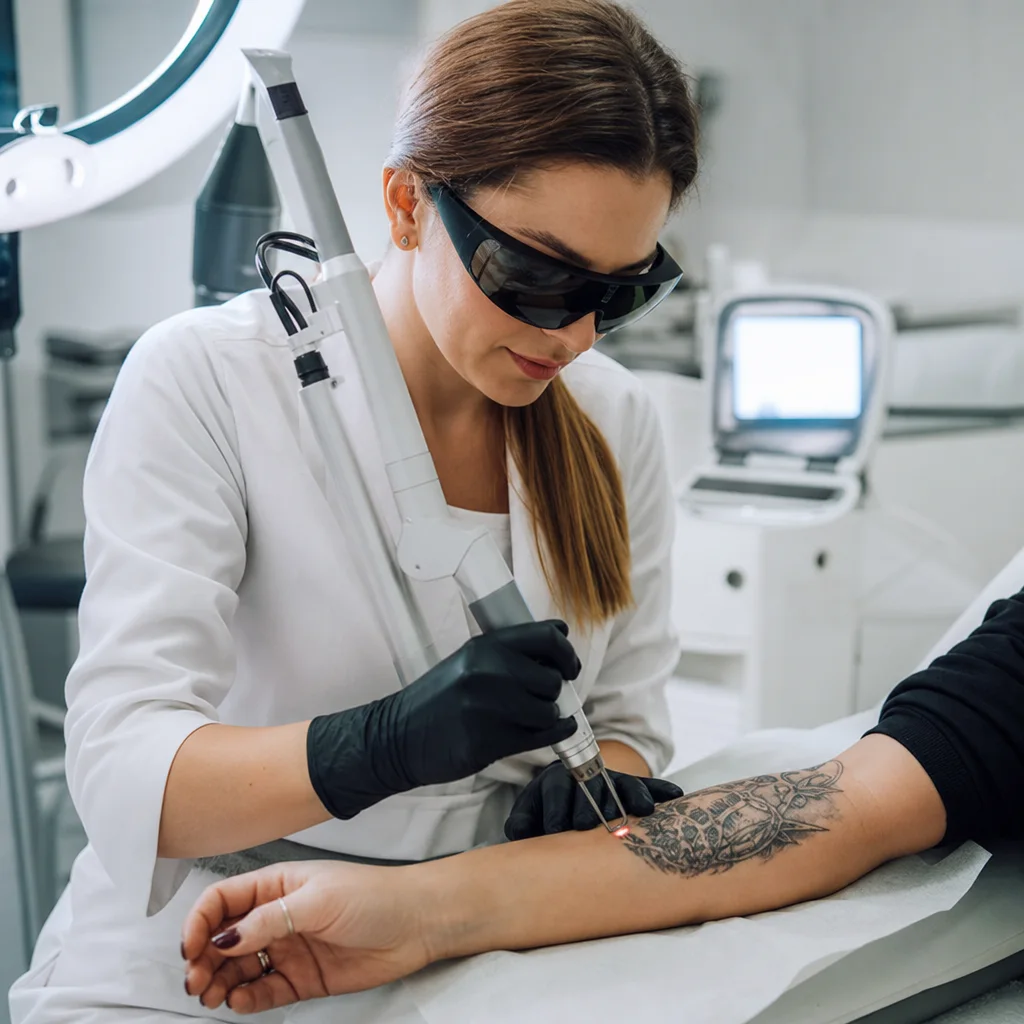
Laser tattoo removal during pregnancy is an area where clinical practice runs ahead of the formal evidence base — not because practitioners are being cavalier, but because the research needed to establish safety would require exposing pregnant patients to experimental conditions that would be ethically unjustifiable to design. The result is that virtually all clinical guidelines and practitioners recommend deferring tattoo removal until after delivery and breastfeeding completion, based on a combination of physiological reasoning, minimal safety data, and the precautionary principle.
The Physiological Concerns
The primary concern with laser tattoo removal during pregnancy involves the fragmented ink particles that the treatment generates. After laser sessions, the body clears ink fragments via macrophage-mediated lymphatic transport, with particles eventually processed through the liver and other organs. The theoretical concern is whether fragmented ink particles could cross the placental barrier and expose the developing fetus to potentially toxic compounds. Many tattoo inks contain heavy metal pigments, aromatic hydrocarbons, and other compounds whose systemic effects in small concentrations are not comprehensively characterized.
The probability and magnitude of fetal exposure from tattoo removal in a healthy adult during a brief treatment course is likely very low, but "likely very low" is insufficient reassurance for an irreversible developmental exposure risk. The precautionary logic is sound: the potential upside of completing removal during pregnancy rather than waiting 6 to 12 months is minimal, while the unknown risk, however small, involves a developing fetus.
Hormonal and Skin Changes in Pregnancy
Pregnancy involves substantial hormonal changes that affect skin physiology. Melanocyte-stimulating hormone levels rise during pregnancy, increasing melanocyte activity and making the skin more responsive to inflammation-triggered pigmentation changes — including post-inflammatory hyperpigmentation. This means that the already real risk of PIH from laser treatment in any context is potentially heightened during pregnancy, particularly in skin types already at elevated risk.
The increased vascularity of pregnancy also affects how the skin responds to laser energy, potentially changing the thermal response and bleeding risk during and after treatment. These physiological changes make the risk-benefit calculation less favorable for elective treatment during pregnancy compared to the post-partum period.
What to Do Post-Delivery
Most practitioners recommend waiting until breastfeeding is complete before beginning or resuming a removal course. While the systemic burden from tattoo removal is likely small, the same precautionary logic applies to avoiding any unnecessary systemic processing during lactation, given that many compounds are excreted in breast milk. After breastfeeding completion, there are no physiological reasons specific to recent childbirth that would contraindicate tattoo removal in an otherwise healthy patient.
Advertisement
Questions patients ask
Can I get tattoo removal while pregnant?
Virtually all clinical guidelines and experienced practitioners recommend deferring tattoo removal until after delivery and breastfeeding completion. The theoretical risk of fetal exposure to fragmented ink particles and the increased risk of pigmentation complications during pregnancy both support waiting.
Is it safe to get a tattoo removed while breastfeeding?
Most practitioners recommend waiting until breastfeeding is complete. The precautionary concern involves the systemic processing of fragmented ink particles and potential trace secretion in breast milk. The actual risk may be very low, but most guidance errs on the side of caution.
Will pregnancy change my existing tattoos?
Pregnancy can affect tattoo appearance through skin stretching, weight gain, and hormonal effects on melanocyte activity. Tattoos over areas of significant stretching (abdomen, hips, breasts) may distort, which is sometimes a motivation for post-partum removal or modification.
How long should I wait after delivery before starting tattoo removal?
After delivery, most practitioners recommend waiting until breastfeeding is complete. After weaning, there is no specific post-partum waiting period required before beginning a removal course in otherwise healthy individuals.
Blink Editorial Team holds a in biomedical science and has spent more than a decade researching how lasers interact with skin. As Blink's Editorial Team she reviews the clinical accuracy of our coverage and works from peer-reviewed literature rather than marketing claims.
Scientific claims in this article are supported by the peer-reviewed literature and public-health authorities listed below. External links open in a new tab.
Khunger N, Molpariya A, Khunger A. "Complications of Tattoos and Tattoo Removal: Stop and Think Before you ink." J Cutan Aesthet Surg. 2015;8(1):30-36. PMC
Sardana K, Ranjan R, Ghunawat S. "Laser Tattoo Removal: A Clinical Update." J Cutan Aesthet Surg. 2015;8(1):9-15. PMC
Gurnani P, Williams N, Al-Hetheli G, et al. "Comparing the efficacy and safety of laser treatments in tattoo removal: A systematic review." J Am Acad Dermatol. 2022;87(1):103-109. DOI · PubMed
U.S. Food & Drug Administration. "Tattoo Removal: Options and Results." FDA.gov
The Blink Newsletter
Precision reporting on tattoo removal, laser technology, and skin science. Free, twice monthly.