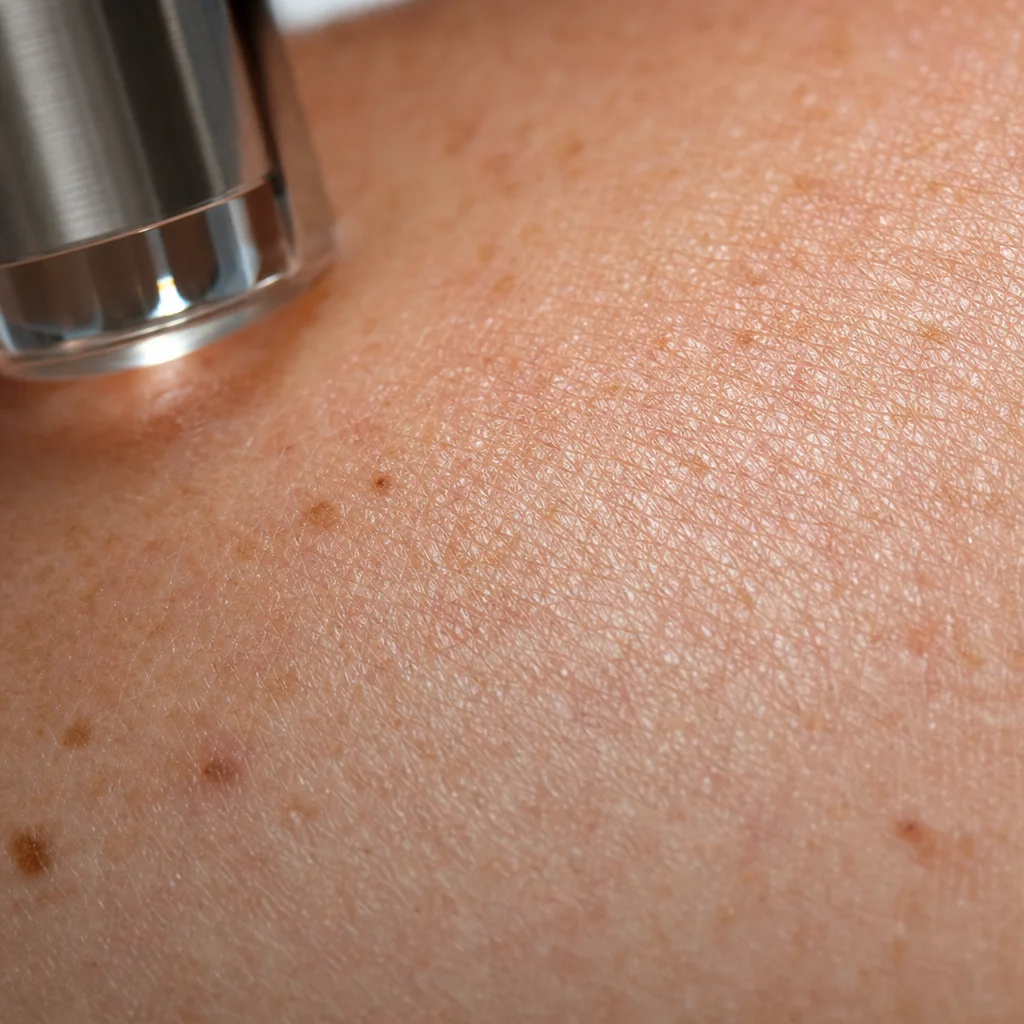
The terms "picosecond" and "nanosecond" refer to pulse duration — how long each burst of laser energy lasts. One nanosecond is one billionth of a second. One picosecond is one thousandth of a nanosecond. In laser medicine, this seemingly minor difference in timing has profound physical consequences for how effectively ink particles are shattered and how much collateral thermal damage is caused to surrounding tissue.
The Physics of Pulse Duration
When a laser pulse interacts with a tattoo ink particle, two photomechanical mechanisms compete with each other: photomechanical disruption (the "shockwave effect") and photothermal heating (the "burning effect"). Shorter pulses favor photomechanical disruption — the rapid energy delivery creates a shockwave that shatters the particle mechanically rather than heating and burning it.
Picosecond pulses deliver their energy so quickly that the ink particle doesn't have time to heat and transfer that heat to surrounding tissue before the pulse is over. The dominant mechanism is mechanical shattering, which produces smaller ink fragments and less thermal spread. Nanosecond pulses are longer — still very fast by everyday standards, but long enough that thermal effects play a more significant role.
The practical result is that picosecond lasers typically produce finer ink fragmentation, which is processed more efficiently by macrophages, and cause less collateral heat damage to surrounding skin. This theoretically means clearer ink removal per session and a lower risk of thermal side effects like hyperpigmentation and textural changes.
What Clinical Studies Show
Multiple controlled studies comparing picosecond and Q-switched nanosecond lasers have been published since picosecond devices reached commercial availability. The preponderance of evidence supports picosecond lasers achieving greater ink clearance per session — typically measured at 20 to 35 percent better clearance at equivalent fluence. A meta-analysis published in a leading dermatology journal found that patients treated with picosecond lasers required an average of 1.8 fewer sessions to achieve equivalent clearance compared to Q-switched nanosecond platforms.
The evidence is most robust for black and dark blue ink in lighter skin types, which is unfortunately also the scenario where either technology works reasonably well. For difficult ink colors and darker skin types — where the performance gap matters most clinically — the published evidence is thinner, partly because these populations are underrepresented in published trial cohorts.
Wavelength Options in Each Technology Class
Both picosecond and nanosecond Q-switched lasers are available in multiple wavelengths, and wavelength choice for a given ink color matters regardless of pulse duration. The 1064 nm Nd:YAG wavelength is available in both classes and is the primary choice for dark inks and darker skin types. The 532 nm KTP (second harmonic) is used for red and orange inks. The 755 nm alexandrite wavelength, primarily available in picosecond generation, is the most effective for green and teal ink removal.
This wavelength availability difference is part of why multi-wavelength picosecond platforms have become the preferred technology for comprehensive color tattoo removal: they cover more of the ink color spectrum in a single device class.
Cost Considerations
Picosecond laser devices cost significantly more than nanosecond Q-switched platforms — typically two to three times as much for equivalent functionality. This capital cost is often reflected in higher per-session treatment pricing at clinics with picosecond technology. For patients, this means the technology choice involves a practical tradeoff: potentially fewer sessions at a higher per-session cost versus more sessions at a lower per-session cost. The optimal choice depends on ink complexity and color, individual response, and budget.