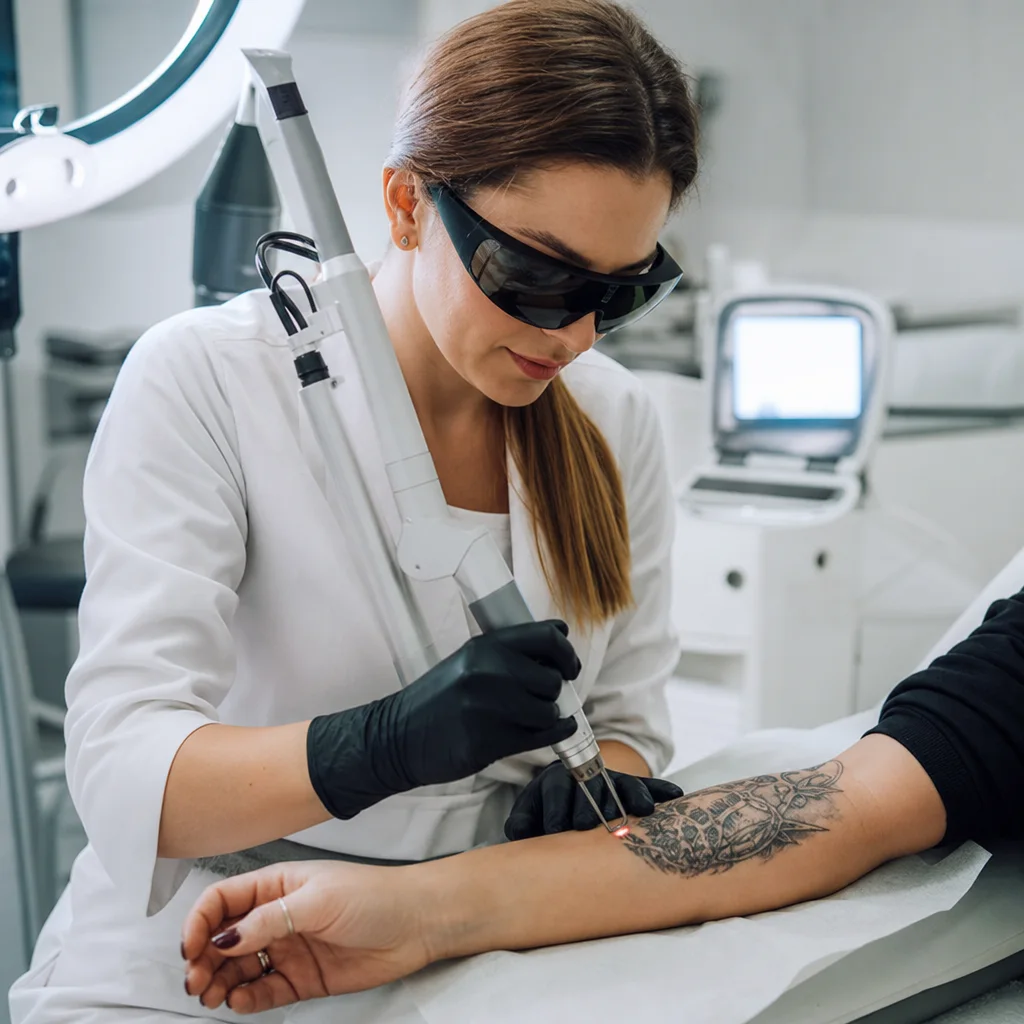
Tattoo Removal for Career Reasons: Realistic Timeline Planning
Planning tattoo removal around a career goal requires realistic timeline management. Here's how to think about the timeline and what options exist when you need faster results.
Blink Editorial Team
Technology & Industry Reporter · Published October 25, 2024 · 5 min read
This article is general educational information compiled by our editorial team from published medical literature. It has not been reviewed by a licensed clinician and is not medical advice. Laser tattoo removal carries real risks including scarring and pigment change. Consult a qualified dermatologist about your own skin before making any decision.
Medical Disclaimer: The information in this article is for educational and informational purposes only. It does not constitute medical advice and is not a substitute for professional medical consultation, diagnosis, or treatment. Individual results from tattoo removal vary. Always consult a qualified dermatologist or licensed medical professional before pursuing any procedure.
Tattoo Removal for Career Reasons: Realistic Timeline Planning — Blink Tattoo Removal
Tattoo removal driven by professional or career goals is one of the most common motivations reported by patients — and one that creates specific timeline pressures that don't align with the biology of tattoo removal. Job applications, military service deadlines, background check timelines, and professional appearance standards often have fixed dates. Laser tattoo removal operates on biological timescales that cannot simply be compressed to meet a deadline. Understanding this tension and the options available for accelerating or managing it is essential for anyone removing a tattoo with a career goal in mind.
Realistic Timeline for Career-Driven Removal
The minimum timeline from starting laser treatment to having a tattoo be essentially invisible depends on tattoo characteristics. For a small, simple black-ink tattoo in a favorable location (upper arm, upper back) on fair skin, 6–8 sessions at 6-week intervals represents approximately 9–12 months from start to near-clearance. More complex or visible-location tattoos may take 18–30+ months. If your job application or military entrance is in 6 months, you cannot achieve complete clearance of a medium professional tattoo within that window with standard protocols. Planning should begin 2–3 years before a career deadline where complete tattoo clearance is required.
Partial Removal for Concealability
If complete removal is not achievable within your timeline, significant lightening may be. A tattoo reduced to 40–50% of its original darkness is often concealable with clothing, makeup, or positioned differently than the original. 3–5 sessions can produce meaningful lightening in most cases, reducing a previously prominent tattoo to one that is much less visible. This lightening goal is a realistic 6-month target that complete clearance is not. Discuss this intermediate goal with your provider explicitly if it is relevant to your situation.
Strategic Options for Faster Progress
For career-urgent cases, some practitioners offer more frequent treatment intervals (every 4–5 weeks) with careful patient monitoring. The R20 method (multiple passes per session with short intervals using PFD patches) can increase per-session clearance in some cases, potentially reducing total session count. Starting treatment with the most aggressive appropriate settings from session one (rather than the standard conservative escalation) is another approach, though it carries higher side-effect risk and should only be considered with experienced, physician-level oversight.
Advertisement
Questions patients ask
Can I speed up tattoo removal to meet a job deadline?
Some acceleration is possible — more frequent sessions, aggressive but appropriate treatment parameters, and the R20/PFD patch method can all improve per-session efficiency. However, the minimum healing time between sessions (4–6 weeks at absolute minimum) cannot be eliminated without significant safety risk. Plan early, be realistic, and discuss acceleration options with your provider explicitly.
What if my employer requires tattoo removal but I need it done quickly?
Document your compliance effort — being actively in a treatment course is evidence of good faith compliance even if removal is not complete. Many employers with tattoo policies understand that complete removal takes time. Letter documentation from your laser provider confirming you are in an active treatment course can demonstrate compliance intent.
Is surgical excision a faster option for career-urgent tattoo removal?
For very small tattoos, surgical excision can remove the tattoo in one procedure. The tradeoff is a permanent scar at the site, which may or may not be preferable to the tattoo depending on the nature of the employer's concern. A scar from excision of a small wrist tattoo may be considered acceptable where the tattoo itself was not.
What visible locations can be covered with cosmetics while in the removal process?
Professional-grade waterproof concealing cosmetics (like Dermablend or Covermark, used by medical professionals) can temporarily conceal even dark tattoos on skin-exposed areas. This provides a bridging option during the removal process for important occasions (interviews, client meetings) before the tattoo has fully cleared.
Blink Editorial Team has reported on the aesthetic-technology industry for seven years, following everything from FDA clearances to the private-equity money reshaping tattoo-removal chains. He reads the filings and trial data so readers do not have to.
Scientific claims in this article are supported by the peer-reviewed literature and public-health authorities listed below. External links open in a new tab.
U.S. Food & Drug Administration. "Tattoo Removal: Options and Results." FDA.gov
American Academy of Dermatology. "Tattoo removal: Lasers outshine other methods." AAD.org
The Blink Newsletter
Precision reporting on tattoo removal, laser technology, and skin science. Free, twice monthly.