The Major Laser Device Brands in Tattoo Removal: What Practitioners Need to Know in 2025
From PicoWay to PicoSure to Enlighten, the competitive landscape for tattoo removal laser systems is crowded. Here's how the major platforms compare on the parameters that matter clinically.
Blink Editorial Team
Technology & Industry Reporter · Published March 15, 2025 · 8 min read
This article is general educational information compiled by our editorial team from published medical literature. It has not been reviewed by a licensed clinician and is not medical advice. Laser tattoo removal carries real risks including scarring and pigment change. Consult a qualified dermatologist about your own skin before making any decision.
Medical Disclaimer: The information in this article is for educational and informational purposes only. It does not constitute medical advice and is not a substitute for professional medical consultation, diagnosis, or treatment. Individual results from tattoo removal vary. Always consult a qualified dermatologist or licensed medical professional before pursuing any procedure.
The Major Laser Device Brands in Tattoo Removal: What Practitioners Need to Know in 2025 — Blink Tattoo Removal
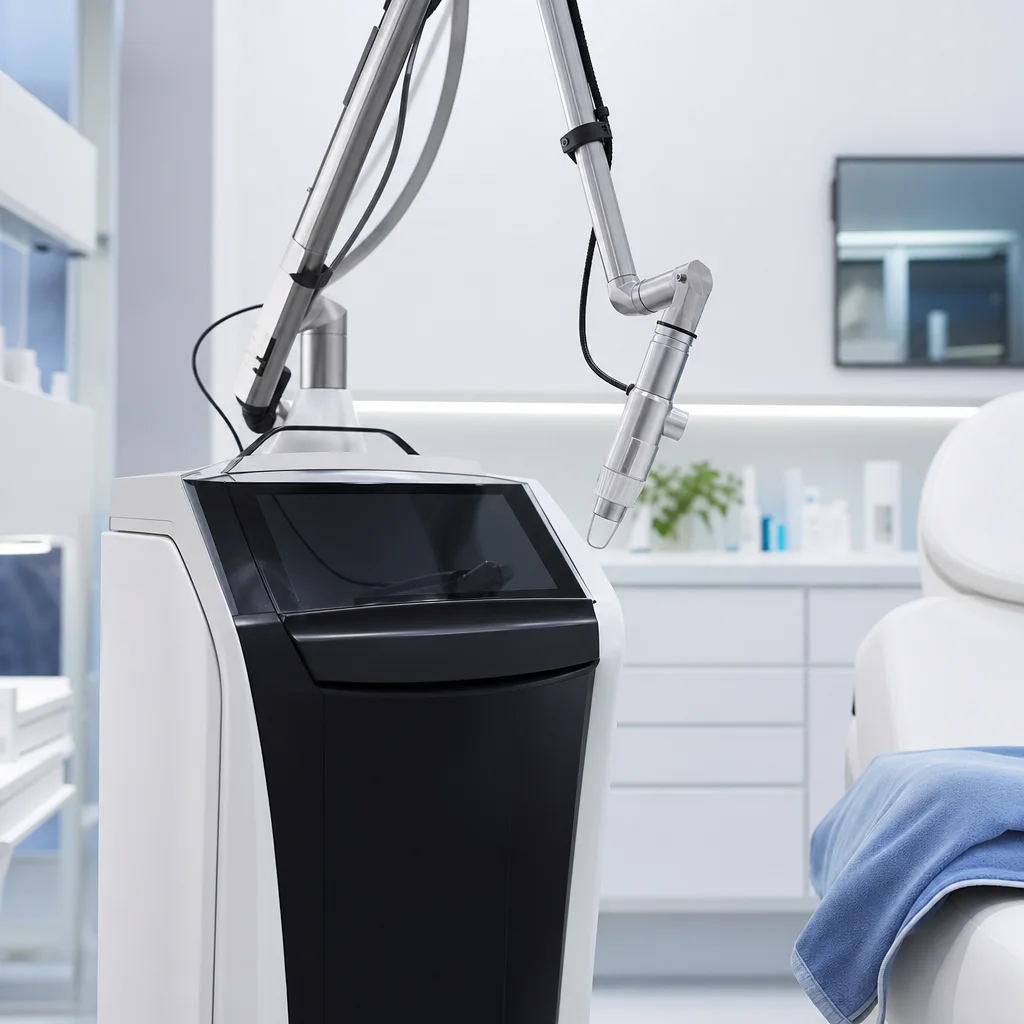
The tattoo removal laser market is populated by several major manufacturers offering platforms that differ in wavelength availability, pulse duration, spot size options, energy delivery systems, and handpiece ergonomics. Practitioners investing $100,000 to $220,000 in a device — or consumers wanting to evaluate a clinic's equipment quality — benefit from understanding the landscape. This comparison focuses on the major picosecond platforms as of 2025, with reference to Q-switched systems where relevant.
The Picosecond Platform Landscape
The main picosecond platforms used for tattoo removal include systems from Cynosure (PicoSure), Candela (PicoWay), Syneron-Candela (Enlighten, now distributed under multiple names), and several others including IncontraLite, PICO4 from Quanta, and newer entrants from Fotona and Lumenis. Each has distinct technical specifications.
PicoSure (Cynosure): One of the first picosecond devices to reach commercial tattoo removal applications. Available in 755 nm as the primary wavelength with 532 nm and 1064 nm optional. Pulse widths in the 550–750 picosecond range. Notable for the Focus lens array attachment used for skin rejuvenation applications. Well-established clinical evidence base.
PicoWay (Candela/Syneron-Candela): Multi-wavelength system with 1064 nm, 532 nm, and 730 nm wavelengths. Very short pulse widths in the 300–400 picosecond range, toward the lower end of current commercial picosecond platforms. Strong clearance data particularly for dark and multicolor inks. The 730 nm wavelength addresses green/teal inks, though coverage differs from alexandrite 755 nm.
Enlighten: A dual-pulse-duration platform offering both picosecond (670 ps) and nanosecond (2 ns) modes in the same device, allowing practitioners to select the pulse duration per treatment. Available in 1064 nm and 532 nm. The flexibility of dual-duration delivery has practical utility for specific clinical scenarios.
Q-Switched Nanosecond Systems
Q-switched Nd:YAG systems remain in active use, particularly at clinics that made capital investments before picosecond technology became widespread, and in price-sensitive markets where the lower capital cost of nanosecond systems enables accessible per-session pricing. Major Q-switched platforms include the Medlite C6 (Cynosure) and various Syneron-Candela and Fotona offerings. These remain legitimate tools for black ink removal in lighter skin types, even if they are less efficient per session than picosecond technology.
How to Evaluate Device Quality
For practitioners evaluating device investments and for informed consumers evaluating clinic equipment, several questions are worth exploring. Wavelength availability: does the platform cover the ink colors you'll be treating most? Pulse width consistency: is the stated pulse duration achieved reliably at high repetition rates? Energy stability: how consistent is the energy output across the spot size options available? Service and support: what is the manufacturer's reputation for device maintenance, calibration support, and handpiece replacement reliability? These practical factors often matter as much in real-world clinical use as peak performance specifications in marketing materials.
Advertisement
Questions patients ask
Is one brand clearly better than others for tattoo removal?
No single platform is dominant for all use cases. PicoWay's very short pulse widths are advantageous for some applications; PicoSure's alexandrite wavelength is well-established for green ink; Enlighten's dual-duration flexibility offers clinical versatility. The best choice depends on the practice's specific patient mix and case complexity.
Do device brand names matter to patients?
Somewhat. Knowing whether a clinic uses a picosecond or nanosecond Q-switched platform is relevant. The specific brand within the picosecond category matters less than whether the device is well-maintained, properly calibrated, and operated by a trained practitioner.
How long do laser devices last?
Medical-grade lasers with proper maintenance typically have service lives of 8 to 15 years. Flash lamps in Q-switched systems and diode pump modules in picosecond systems have finite service lives and require periodic replacement. Clinics with aging equipment may have degraded performance if maintenance has been inconsistent.
Should I ask a clinic what device they use?
Yes, absolutely. A reputable clinic will tell you the device brand, model, and available wavelengths. If they're reluctant to share device details, that's worth noting as you make your decision.
Blink Editorial Team has reported on the aesthetic-technology industry for seven years, following everything from FDA clearances to the private-equity money reshaping tattoo-removal chains. He reads the filings and trial data so readers do not have to.
Scientific claims in this article are supported by the peer-reviewed literature and public-health authorities listed below. External links open in a new tab.
Gurnani P, Williams N, Al-Hetheli G, et al. "Comparing the efficacy and safety of laser treatments in tattoo removal: A systematic review." J Am Acad Dermatol. 2022;87(1):103-109. DOI · PubMed
Wu DC, Goldman MP, Wat H, Chan HHL. "A prospective comparison study of 532/1064 nm picosecond versus nanosecond laser in the treatment of professional tattoos in Asians." Lasers Surg Med. PMC
Freedman JR, Kaufman J, Metelitsa AI, et al. "Lasers in tattoo and pigmentation control: role of the PicoSure laser system." Med Devices (Auckl). 2016;9:63-67. PMC
Bassi A, Campolmi P, et al. "Laser Tattoo Removal." In: StatPearls. Treasure Island (FL): StatPearls Publishing; 2024. NCBI Bookshelf
The Blink Newsletter
Precision reporting on tattoo removal, laser technology, and skin science. Free, twice monthly.