Tattoo Removal Technology in 2026: What's Coming and What It Means for Patients
From improved multi-wavelength picosecond platforms to AI-guided dosimetry and non-laser alternatives in early trials, the next generation of removal technology is taking shape.
Blink Editorial Team
Technology & Industry Reporter · Published September 30, 2024 · 7 min read
This article is general educational information compiled by our editorial team from published medical literature. It has not been reviewed by a licensed clinician and is not medical advice. Laser tattoo removal carries real risks including scarring and pigment change. Consult a qualified dermatologist about your own skin before making any decision.
Medical Disclaimer: The information in this article is for educational and informational purposes only. It does not constitute medical advice and is not a substitute for professional medical consultation, diagnosis, or treatment. Individual results from tattoo removal vary. Always consult a qualified dermatologist or licensed medical professional before pursuing any procedure.
Tattoo Removal Technology in 2026: What's Coming and What It Means for Patients — Blink Tattoo Removal
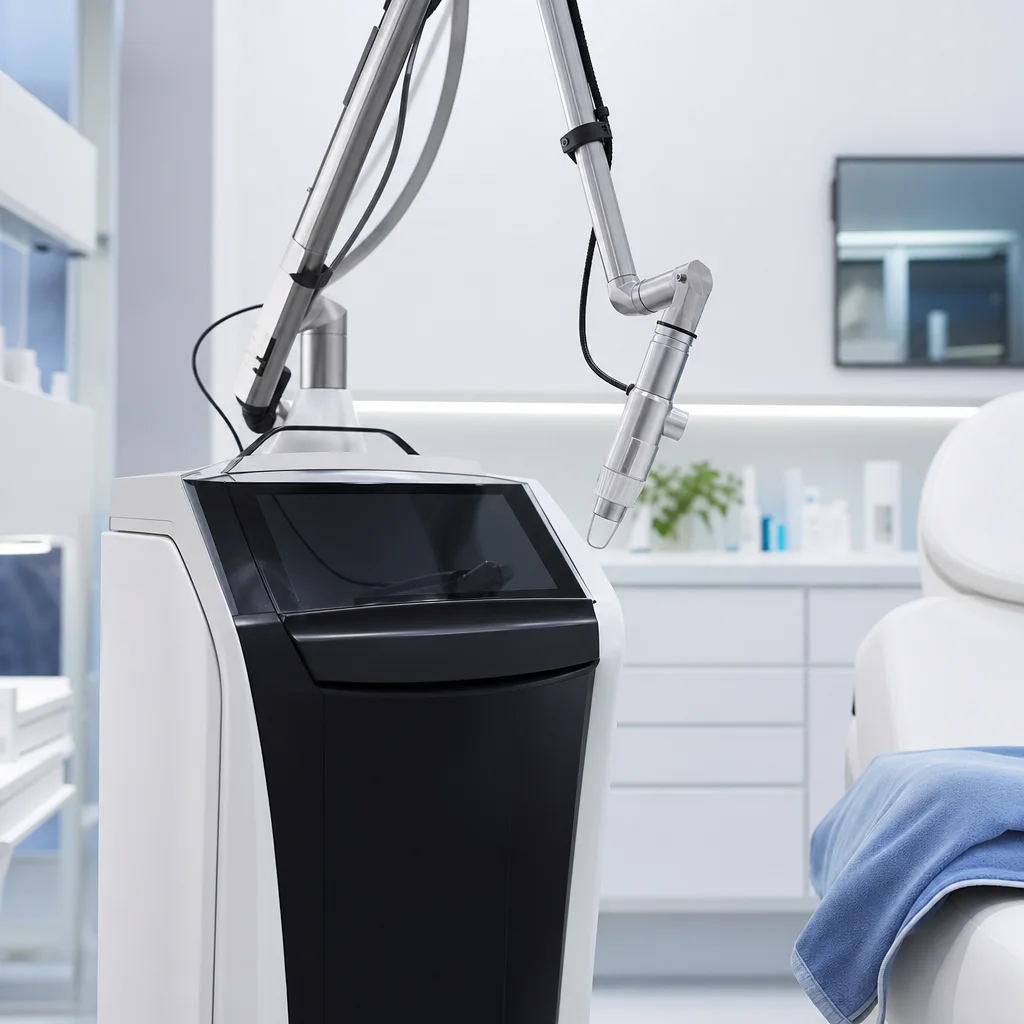
The laser tattoo removal market has changed dramatically in the past decade, largely through the transition from nanosecond Q-switched lasers to picosecond technology, which delivers energy in shorter pulses that more efficiently fragment ink particles with less collateral thermal damage. The next wave of technology, beginning to take shape as devices move through development and regulatory pipelines, promises to address the remaining limitations: difficult ink colors, darker skin types, long treatment courses, and the persistent discomfort that drives dropout. Here's what the technology horizon looks like as of late 2024.
The Continued Evolution of Picosecond Technology
Picosecond lasers are not a monolithic technology — pulse width, peak power, spot size options, and wavelength availability vary significantly across current commercial platforms, and these parameters have meaningful clinical effects. The next generation of picosecond devices focuses on several refinements: shorter pulse durations (pushing toward the femtosecond range in some research contexts), higher peak powers at shorter pulse widths, and improved handpiece optics that allow more precise spot size control during treatment.
Multi-wavelength integration is also advancing, with several manufacturers pursuing tri-wavelength or even quad-wavelength platforms that cover the full ink color spectrum in one device. This consolidation reduces the need for multi-device practices and simplifies practitioner training.
Non-Laser Alternatives in Early Development
The most interesting long-range development in the removal space is the exploration of non-laser alternatives. Two approaches have reached clinical trial stages in recent years. The first uses a micro-needling delivery system to introduce a chemical ink-solubilizing agent directly into the dermis, breaking down ink compounds through chemical rather than photonic disruption. This approach is potentially less painful and less wavelength-dependent than laser, but current formulations face challenges with depth control, scar risk, and treatment efficacy relative to picosecond lasers.
The second approach uses focused ultrasound to disrupt ink particles at the dermis level, similar in concept to ultrasound-mediated drug delivery but applied to mechanical disruption of ink aggregates. This technology is further from clinical application but represents a genuinely different physical mechanism that could eventually complement laser in multi-modality treatment protocols.
AI and Personalized Treatment Protocols
As discussed elsewhere in our coverage, AI-assisted treatment planning is moving from research settings toward commercial platforms. The near-term integration of AI into device software platforms will likely focus on automated skin type classification from imaging, parameter range recommendations that adapt to session-by-session outcomes, and session count forecasting that becomes more accurate as the treatment course progresses. The medium-term vision is a closed-loop system that integrates real-time tissue response monitoring with adaptive parameter adjustment during treatment — a level of personalization that is not clinically feasible today.
Advertisement
Questions patients ask
Is there a tattoo removal method that doesn't use lasers?
Laser is currently the gold standard. Non-laser approaches like chemical injection and focused ultrasound are in early development or limited clinical use but are not widely commercially available or proven equivalent to picosecond laser for most tattoo removal applications.
Are femtosecond lasers available for tattoo removal?
Not commercially as of 2025. Research-stage work explores femtosecond pulse durations, but the practical benefits over current picosecond systems and the substantial equipment cost and complexity have not yet supported commercial development.
When will tattoo removal technology be good enough for one-session removal?
Single-session complete removal remains unlikely in the near term for professional tattoos due to the biological clearance process — ink fragmentation by laser must be followed by immune-mediated clearance that takes weeks. Even with better lasers, the biology sets a floor on how fast the process can complete.
How should I think about choosing a device type today versus waiting for better technology?
Current picosecond technology is genuinely effective for most tattoos. Waiting indefinitely for 'better technology' delays treatment and may involve multiple years. If your tattoo is causing you distress, current technology is well-developed enough for most cases, particularly for dark inks on lighter skin types.
Blink Editorial Team has reported on the aesthetic-technology industry for seven years, following everything from FDA clearances to the private-equity money reshaping tattoo-removal chains. He reads the filings and trial data so readers do not have to.
Scientific claims in this article are supported by the peer-reviewed literature and public-health authorities listed below. External links open in a new tab.
Gurnani P, Williams N, Al-Hetheli G, et al. "Comparing the efficacy and safety of laser treatments in tattoo removal: A systematic review." J Am Acad Dermatol. 2022;87(1):103-109. DOI · PubMed
Bassi A, Campolmi P, et al. "Laser Tattoo Removal." In: StatPearls. Treasure Island (FL): StatPearls Publishing; 2024. NCBI Bookshelf
U.S. Food & Drug Administration. "Tattoo Removal: Options and Results." FDA.gov
American Academy of Dermatology. "Tattoo removal: Lasers outshine other methods." AAD.org
The Blink Newsletter
Precision reporting on tattoo removal, laser technology, and skin science. Free, twice monthly.